Seniors moving right

U.S. seniors — those aged 65 and older — have moved from a reliably Democratic group to a reliably Republican one over the past two decades.

Gallup reports that “from 1992 through 2006, seniors had been solidly Democratic and significantly more Democratic than younger Americans. Over the last seven years, seniors have become less Democratic, and have shown an outright preference for the Republican Party since 2010.

“In 1992, 53% of senior citizens, on average, identified as Democrats or said they were independents but leaned Democratic, while 39% identified as Republicans or leaned Republican, resulting in a 14-percentage-point Democratic advantage in seniors’ party affiliation. Last year, 48% of seniors identified as or leaned Republican, and 45% Democratic, a three-point Republican advantage. The full 1992-2013 party affiliation trends for seniors and younger Americans are shown on page 2.

“By comparison, younger Americans, those aged 18 to 64, shifted from +1 point Democratic in 1992 to +8 Democratic in 2013, and tended to show greater Democratic advantages from 2006 to 2013 than prior to that. The changes in younger Americans’ party affiliation generally follow those among the broader U.S. adult population between 1992 and 2013.

“Senior citizens’ changing political preferences are also apparent in their recent presidential vote preferences, according to Gallup’s final pre-election polls. Senior voters favored the Democratic candidate in each election from 1992 through 2004, including a 17-point margin for Bill Clinton in 1992, the highest among age groups. In each of the last two elections, by contrast, seniors were the only age group to support the Republican candidate over Barack Obama. Continue reading “Seniors moving right”

Twelve steps backward

Say you’ve been diagnosed with a serious, life-altering illness or psychological condition. In lieu of medication, psychotherapy, or a combination thereof, your doctor prescribes nightly meetings with a group of similarly afflicted individuals, and a set of 12 non-medical guidelines for recovery, half of which require direct appeals to God. What would you do?imgres-1

Writing in The Atlantic, Jake Flanagan states that “Especially to nontheists, the concept of “asking God to remove defects of character” can feel anachronistic. But it is the sixth step in the 12 Steps of Alcoholics Anonymous—the prototype of 12-step facilitation (TSF), the almost universally accepted standard for addiction-recovery in America today. “From its origins in the treatment of alcoholism, TSF is now applied to over 300 addictions and psychological disorders: drug-use, of course (Narcotics Anonymous), but also smoking, sex and pornography addictions, social anxiety, kleptomania, overeating, compulsive spending, problem-gambling, even “workaholism.”

“Although AA does not keep membership records—the idea being pretty antithetical to the whole “anonymity” thing—the organization estimates that as of January 2013, more than 1 million Americans regularly attended meetings with one of roughly 60,000 groups. Dr. Lance Dodes, a recently retired professor of psychiatry at Harvard Medical School, estimates about 5 million individuals attend one or more meetings in a given year. Indeed the 12-step empire is vast, but Dodes thinks it’s an empire built on shaky foundations. In his new book, released today, The Sober Truth: Debunking the Bad Science Behind 12-Step Programs and the Rehab Industry (co-written with Zachary Dodes), he casts a critical eye on 12-step hegemony; dissecting the history, philosophy, and ultimate efficacy of TSF, lending special scrutiny to its flagship program. “Peer reviewed studies peg the success rate of AA somewhere between five and 10 percent,” writes Dodes.

“About one of every 15 people who enter these programs is able to become and stay sober.” This contrasts with AA’s self-reported figures: A 2007 internal survey found that 33 percent of members said they had been sober for more than a decade. Twelve percent claimed sobriety for five to 10 years, 24 percent were sober for one to five years, and 31 percent were sober for under a year. Of course, those don’t take into account the large number of alcoholics who never make it through their first year of meetings, subsequently never completing the 12 steps (the definition of success, by AA’s standards). Continue reading “Twelve steps backward”

On state licensing of bigotry

“Foes of equality see the writing on the wall,” writes Chad Griffen, President of the Human Rights Campaign (HRC) in a letter to supporters today:imgres

“State by state, they are losing the fight for marriage equality. So they are resorting to an insidious new tactic to undermine lesbian, gay, bisexual and transgender (LGBT) civil rights:

“Using religion as a weapon to legalize discrimination against LGBT people. Last month HRC supporters helped shut down abominable “License to Discriminate” bills in Arizona and, for now, Kansas and South Dakota. Unbelievably, the bills – thinly veiled ploys to allow discrimination against LGBT people – could have made it legal to discriminate against individuals on the grounds of “religious freedom.” If these bills had gone through as intended, private businesses in these states could have legally refused an LGBT person anything from a seat at a restaurant, to photography services for their wedding, to accounting and tax counsel – all because of who they are or who they love.Tens of thousands of HRC supporters, fair-minded business leaders and people of faith said “NO!” to these sickening anti-equality ploys because treating people differently based on who they are is discrimination. Lawmakers listened, and many of these hateful bills have stopped in their tracks – at least for now.

“But this new and dangerous form of attack on LGBT equality is just the beginning. We have concerns that efforts like these could be revived in any of the 33 states that do not protect LGBT people at the state level. Even in states like Maine, where there are state-level protections for LGBT people, we recently had to fight back efforts to carve out an exception that would have deliberately exposed LGBT people to legalized discrimination. We must be prepared to move swiftly to shut down these efforts to divide and discriminate wherever they appear. Our immediate goal is to raise $150,000 by March 31st to fight back against these efforts and continue to press forward for non-discrimination initiatives in the next 90 days. Continue reading “On state licensing of bigotry”

Not divergent enough

imgres

Divergent isn’t perfect. And I am not referring to the film’s dystopian world, wherein society has been split into six “factions”—the smart (erudite), the peaceful (amity), the truthful (candor), the selfless (abnegation), the brave (dauntless) and the outcasts (the factionless).

As Natalie Mitchell writes in the MS Magazine blog: “I am referring to the fact that it does not, as with most mainstream dystopian narratives, go far enough in its critique. Divergent does not include enough representations of those who would be (and are) factionless in the real world (people of color, trans people, disabled people, non-heterosexuals), does not adequately decry violence (especially sexualized and interpersonal violence) and, finally, does not go beyond the same old story that the real “happy ending” is finding a (hot) guy to love.

“However, I still loved the book. And I loved the film. Would it have been great to have a woman of color cast as Tris? Of course. But Shailene Woodley does a phenomenal job as the hero who defies social norms, and Christina, her best friend, (played brilliantly by Zoë Kravitz) is no Rue (hero Katniss’s friend inThe Hunger Games) (As an added bonus, Woodley is sharing laudable divergent views on Twilight as promoting toxic relationship models.)

“Would it have been nice if there were a lesbian or trans or disabled primary character in the film? Indeed. But at least there are non-normative body types (Molly Atwood, played by Amy Newbold), leaders of color (Max, played by Mekhi Phifer) and awesome female tattoo artist-renegades such as Tori Wu (played by Maggie Q). How about an ending where the protagonist doesn’t find “true love” in a male that is older, has more power and commits violent acts against her? Yes, that would have been awesome (but Tobias “Four” Eaton, played by Theo James, is certainly worlds better than the likes of vampire Edward Cullen in Twilight).

Continue reading “Not divergent enough”

Stereotypes of LGBT affluence

Despite a commonly held belief that LGBT Americans tend to live it up in classy urban neighborhoods, they struggle with disproportionately high levels of poverty compared to straight people.Excerpted below, Nathan McDermott writes in today’s issue of The Atlantic about misperceptions of LGBT wealth and poverty:

imgres

“Who are America’s gays? To hear it as Supreme Court Justice Antonin Scalia would have it, gays are a privileged set, living it up in cities across the country. As the justice wrote in his dissent to Romer v. Evans—a landmark 1996 case that overturned a Colorado state constitutional amendment prohibiting legal protections for gays and lesbians—“Those who engage in homosexual conduct tend to reside in disproportionate numbers in certain communities.” Even more ominously, to Scalia, they have “high disposable income,” which gives them “disproportionate political power… to [achieve] not merely a grudging social toleration, but full social acceptance, of homosexuality.”

“The pernicious insinuation—that gays and lesbians are one the wealthiest demographics in the country—isn’t a new cliché. Some of the most ingrained public images of LGBT people are their cosmopolitan, highfalutin lifestyle; gays, so the story goes, live in gentrified urban neighborhoods like The Castro in San Francisco or Chelsea in New York, eat artisanal cheese, and drink $12 cocktails.

“But like most stereotypes, the myth of gay affluence is greatly exaggerated.

“In reality, gay Americans face disproportionately greater economic challenges than their straight counterparts. A new report released by UCLA’s Williams Institute found that 29 percent of LGBT adults, approximately 2.4 million people, experienced food insecurity—a time when they did not have enough money to feed themselves or their family—in the past year. In contrast, 16 percent of Americans nationwide reported being food insecure in 2012. One in 5 gays and lesbians aged 18-44 received food stamps in the last year, compared with just over 1 in 4 same sex couples raising children. The LGBT community has made huge political strides over the past decade, but in economic matters they still lag far behind the rest of the country. Continue reading “Stereotypes of LGBT affluence”

Rethinking plagiarism

Professors often frame plagiarism as an ethical problem, with a simple solution: don’t do it. imagesAs InsideHigher Ed reports, “For students tempted to plagiarize knowingly, that approach might work. But the academic integrity rhetoric ignores the fact that students sometimes unintentionally plagiarize or misrepresent source material in their work, panelists said Thursday during a session on the topic at the Conference on College Composition and Communication.

“Stephanie Roach, associate professor and director of writing programs at the University of Michigan at Flint, recalled a class discussion about why students misuse sources in their work. Students named all the usual suspects – the assignment was too hard or they ran out of time, for example.

“But Roach was struck by a student who said, “I didn’t think I was that person.” The student had crossed a boundary she’d never thought she would, and Roach wondered how it had happened. The professor said she later mused with colleagues that the war on plagiarism was like the war on drugs, in that academe tells students to “Just say no,” painting a bright line between right and wrong and assuming students have the tools they need to make the right choice.

“But sometimes they don’t. Students might misrepresent a source because they don’t understand it, or don’t know how to weave it in with their own thoughts, panelists said. And open-source culture, where facts and thoughts easily can be “plucked” from webpages, makes that supposed bright line dimmer still.Valerie Seiling Jacobs, a master of fine arts in nonfiction writing candidate at Columbia University, doesn’t lecture her first-year writing students on intentional plagiarism, she said. She tells students that if they’re going to deliberately misuse others’ work, “then you have bigger problems than I can ever help you solve.”Instead, Seiling Jacobs focuses on inadvertent misuses, which are far more plentiful. Continue reading “Rethinking plagiarism”

Microaggressions

A tone-deaf inquiry into an Asian-American’s ethnic origin. Cringe-inducing praise for how articulate a black student is. An unwanted conversation about a Latino’s ability to speak English without an accent.

The New York times reports that “this is not exactly the language of traditional racism, but in an avalanche of blogs, student discourse, campus theater and academic papers, they all reflect the murky terrain of the social justice word du jour — microaggressions — used to describe the subtle ways that racial, ethnic, gender and other stereotypes can play out painfully in an increasingly diverse culture.

“On a Facebook page called “Brown University Micro/Aggressions” a “dark-skinned black person” describes feeling alienated from conversations about racism on campus. A digital photo project run by a Fordham University student about “racial microaggressions” features minority students holding up signs with comments like “You’re really pretty … for a dark-skin girl.” The “St. Olaf Microaggressions” blog includes a letter asking David R. Anderson, the college’s president, to address “all of the incidents and microaggressions that go unreported on a daily basis.”.

“What is less clear is how much is truly aggressive and how much is pretty micro — whether the issues raised are a useful way of bringing to light often elusive slights in a world where overt prejudice is seldom tolerated, or a new form of divisive hypersensitivity, in which casual remarks are blown out of proportion.

“The word itself is not new — it was first used by Dr. Chester M. Pierce, a professor of education and psychiatry at Harvard University, in the 1970s. Until recently it was considered academic talk for race theorists and sociologists. Continue reading “Microaggressions”

Oops, NEA budget to be cut

Today the Obama administration announced reductions in the proposed budget of the National Endowment of the Arts (NEA) from $154-million to $146-million.  images-1

Writing in the New York Times, Patricia Cohen discusses this historical role in light of a new study on the NEA’s impact:

“Ever since the late 1980s, when the performance artist Karen Finley started playing around with yams and chocolate, the National Endowment for the Arts has come under fire from some conservative lawmakers. Back then the agency was castigated for giving grants to provocative artists like Ms. Finley, whom some critics called obscene.Now House Republicans charge that the endowment supports programming primarily attended by the rich, causing “a wealth transfer from poorer to wealthier citizens.” A new study to be released on Wednesday challenges that assertion, however, and concludes that federally supported arts programs attract people across the income spectrum; the wealthy, yes, but also many below the poverty line.

“The study, by the National Center for Arts Research at Southern Methodist University in Dallas, was specifically intended to test lawmakers’ propositions about arts funding. Last year the House Budget Committee, led by Representative Paul D. Ryan, Republican of Wisconsin, issued a proposed budget for the 2014 fiscal year, which eliminated all funding for the arts endowment as well as the National Endowment for the Humanities and the Corporation for Public Broadcasting.

Continue reading “Oops, NEA budget to be cut”

Alpert award to Daniel J. Martinez

Daniel J. Martinez is the Visual Arts recipient of the 2014 Herb Alpert Award.

“Daniel Joseph Martinez is a post-conceptual artist who engages in an interrogation of social, political and cultural mores through artworks that have been described as nonlinear, asymmetrical, multidimensional propositions. His works range from the digital to the analogue, ephemeral to the solid,” the Alpert Foundation today announced.

Daniel Joseph Martinez

Martinez is a Professor in the Department of Art at the University of California, Irvine

The Alpert Award in the Arts is an unrestricted prize of $75,000 given annually to five risk-taking mid-career artists working in the fields of dance, film/video, music, theatre and the visual arts. The prize was initiated and funded by the Herb Alpert Foundation and has been administered by California Institute of the Arts since 1994. The Alpert Award honors and supports artists respected for their creativity, ingenuity, and bodies of work, at a moment in their lives when they are poised to propel their art in new and unpredictable directions. The Alpert recognizes experimenters who are making something that matters within and beyond their field.


More information at: http://www.herbalpertawards.org

Most see human role in global warming

images

More Americans believe increases in the Earth’s temperature over the last century are due to pollution from human activities (57%) than to naturally occurring changes in the environment (40%).Gallup reports that “The balance of views on this issue is essentially unchanged from 2013, but reflects broader agreement with the idea that mankind is responsible for global warming than was the case from 2010 through 2012, when barely half believed it. Agreement that human activities are responsible has yet to return, however, to the 61% level seen as recently as 2007. This trend comes from Gallup’s annual Environment poll, a nationally representative telephone survey conducted each March since 2001. The 2014 update was conducted March 6-9.

“Americans’ prevailing view that human activity is responsible for global warming doesn’t necessarily translate into concern over the issue. The percentage of Americans worried about global warming (as well as “climate change”) still ranks low relative to other issues, and barely a third expect global warming to pose a serious threat in their own lifetime.In the same survey, Gallup asks Americans to describe their general understanding of global warming, with 33% this year — a record high — saying they understand global warming “very well,” up from 27% in 2013 and triple the level seen in the initial 1992 measure.The proportion understanding the issue “fairly well” has also increased over the long term, from 42% in 1992 to 51% today, while the percentage who don’t understand has dropped by more than half, from 44% to 16%.Leading climate science researchers in the U.S. and globally — including those at the International Panel on Climate Change, a U.N. body that is at the forefront of climate research — are convinced that elevated levels of carbon dioxide and other byproducts of fossil fuel use are the reason the Earth’s temperature has warmed. Continue reading “Most see human role in global warming”

Children’s book apartheid

Of 3,200 children’s books published in 2013, just 93 were about black people, according to a study by the Cooperative Children’s Book Center at the University of Wisconsin.

Walter Myers writes in the New York Times that “Reading came early to me, but I didn’t think of the words as anything special. I don’t think my stepmom thought of what she was

images-1

doing as more than spending time with me in our small Harlem apartment.

From my comfortable perch on her lap I watched as she moved her finger slowly across the page. She probably read at about the third grade level, but that was good enough for the True Romance magazines she read. I didn’t understand what the stories were about, what “bosom” meant or how someone’s heart could be “broken.” To me it was just the comfort of leaning against Mama and imagining the characters and what they were doing.

“Later, when my sisters brought home comic books, I got Mama to read them to me, too. The magazines and comics pushed me along the road of the imaginative process. When I got my first books — “The Little Engine That Could,” “Bible Stories for Every Day,” and “Goldilocks and the Three Bears” — I used them on the same journeys. In the landscape of my mind I labored as hard as I could to get up the hill. I stood on the plain next to David as he fought Goliath, and tasted the porridge with Goldilocks.

“As a teenager I romped the forests with Robin Hood, and trembled to the sound of gunfire with Henry in “The Red Badge of Courage.” Later, when Mama’s problems began to overwhelm her, I wrestled with the demons of dealing with one’s mother with Stephen Dedalus in “A Portrait of the Artist as a Young Man.” But by then I was beginning the quest for my own identity. To an extent I found who I was in the books I read. I was a person who felt the drama of great pain and greater joys, whose emotions could soar within the five-act structure of a Shakespearean play, or find quiet comfort in the poems of Gabriela Mistral. Every book was a landscape upon which I was free to wander.

“In the dark times, when my uncle was murdered, when my family became dysfunctional with alcohol and grief, or when I realized that our economics would not allow me to go to college, I began to despair. I read voraciously, spending days in Central Park reading when I should have been going to school. Continue reading “Children’s book apartheid”

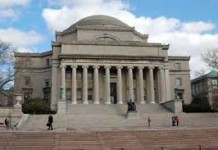
Why the Columbia firings matters

About a month ago, The New York Times’s Nicholas Kristof wrote a much-discussed column calling for academics to take on a greater role in public life. imagesMost professors, he lamented, “just don’t matter in today’s great debates,” having instead burrowed into rabbit holes of hyper-specialization. PhD programs, he wrote, “have fostered a culture that glorifies arcane unintelligibility while disdaining impact and audience.” Professors, Kristof pleaded, “don’t cloister yourselves like medieval monks—we need you!”

As reported in The Nation, Shortly before his column came out, Carole Vance and Kim Hopper, longtime professors at Columbia University’s Mailman School of Public Health, learned that they were losing their jobs because they hadn’t brought in enough grant money. Both, ironically, are models for the sort of publicly engaged intellectual Kristof wants to see more of. Vance has done pioneering work on the intersection of gender, health and human rights. “She has been a mentor and a leading influence on generations of scholars as well as activists and practitioners,” says Rebecca Schleifer, the former advocacy director for the health and human rights division at Human Rights Watch. Hopper, who divides his time between Columbia and the Nathan S. Kline Institute for Psychiatric Research, is both an advocate for the homeless and one of the nation’s foremost scholars on homelessness. Last year, American Anthropologist ran a piece highlighting his work beyond academia, noting that Hopper “has long urged anthropologists to take part in public debates, to translate ethnographic findings into policy proposals.”

“His termination, along with Vance’s, suggests that scholars have good reason not to take this advice. Kristof is right that universities have become inhospitable places for public intellectuals, but he misses the ultimate cause. The real problem isn’t culture. It’s money.

“Like many schools of public health, Mailman operates on a “soft money” model, which means that professors are expected to fund much of their salaries through grants. (Many professors there, including Vance and Hopper, work without tenure.) Recently, the amount expected has increased—from somewhere between 40 and 70 percent of their salaries to as much as 80 percent—and professors say that it’s become a hard rule, with less room for the cross-subsidization of those who devote themselves to teaching or whose research isn’t attractive to outside funders. Meanwhile, the National Institutes of Health, the primary source of grant money, has seen its budget slashed. These days, only 17 percent of grant applications are successful—a record low. Continue reading “Why the Columbia firings matters”

Protecting the public from for-profit colleges

The Obama Administration announced today new steps to address growing concerns about burdensome student loan debt by requiring career colleges to do a better job of preparing students for gainful employment—or risk losing access to taxpayer-funded federal student aid.

The proposed regulations released by the U.S. Department of Education “will help to strengthen students’ options for higher education by giving all career training programs an

images

opportunity to improve, while stopping the flow of federal funding to the lowest-performing ones that fail to do so.

“Higher education should open up doors of opportunity, but students in these low-performing programs often end up worse off than before they enrolled: saddled by debt and with few—if any—options for a career,” said U.S. Education Secretary Arne Duncan. “The proposed regulations address growing concerns about unaffordable levels of loan debt for students enrolled in these programs by targeting the lowest-performing programs, while shining a light on best practices and giving all programs an opportunity to improve.”

“To qualify for federal student aid, the law requires that most for-profit programs and certificate programs at non-profit and public institutions prepare students for gainful employment in a recognized occupation. Some of these programs, whether public, private, or for-profit, empower students to succeed by providing high-quality education and career training. But many of these programs, particularly those at for-profit colleges, are failing to do so—at taxpayers’ expense and the cost of students’ futures.

Students at for-profit colleges represent only about 13 percent of the total higher education population, but about 31 percent of all student loans and nearly half of all loan defaults. In the most recent data, about 22 percent of student borrowers at for-profit colleges defaulted on their loans within three years, compared to 13 percent of borrowers at public colleges. Continue reading “Protecting the public from for-profit colleges”

50 shades of gender inequity

Not only does the gender wage gap have real staying power, but it’s alive and kicking in all 50 states.

As reported in Huffington Post, “according to a new report released earlier this week by the American Association of University Women (AAUW), the gender pay gap — which had significantly narrowed since the 1970s — has slowly plateaued in recent years.

“Compiling data from the Census Bureau, the Department of Education and the Bureau of Labor Statistics, AAUW calculated the median salaries for full-time employment in all 50 states and the District of Columbia. In the U.S., women are paid 23 percent less than men on average. Although down from a 2012 figure of 91 percent, Washington, D.C. maintains the smallest wage gap in the U.S., with women earning 90 percent of what their male counterparts do ($66,754 vs. $60,116). Also consistent with last year’s results, Wyoming came in last with women taking home a shocking 64 percent of men’s average earnings ($51,932 vs. $33,152).

“While it remains important to note that geography and local industry have a large influence on differing salaries, there are other major factors that come into play — namely education level, race/ethnicity and age. AAUW analyzed the pay gap by looking at full-time, year-round workers over the age of 15. Beyond comparing salaries of all men to salaries of all women, the report broke down wage imbalances between the sexes along three additional demographics: race/ethnicity, education level and age. Asian-American women had the largest gender wage gap while Hispanic or Latina women’s earnings were most comparable to their male counterparts.  Continue reading “50 shades of gender inequity”

Amazon not-so prime

We knew it couldn’t last. Here at the Worlding offices, we’ve been getting cases of soft drinks delivered via

images-2

Amazon Prime, along with all of the other junk we buy. it was just too good to be true.

As Wired reports, “for nearly a decade, Amazon.com customers could enjoy unlimited two-day shipping for $79 per year. But the company has now hiked that price to $99. The move could change purchasing habits at the world’s largest online retailer if customers balk at the increase. But Prime — which also offers unlimited access to online video — is still a perk that’s unrivaled across the web.

“For existing Prime members, the hike will hit if their membership renews before April 17. And according to reports, the price for new members goes up March 20. Though the extra $20 might be disappointing to customers, it was expected. In its most recent earnings call, the company said it would likely have to raise Prime’s price to keep up with rising shipping costs. CFO Tom Szktuk told analysts and reporters that the price hike would be anywhere form $20 to $40, so Amazon is at least coming in at the bottom end of the scale.

“Of course, that was probably part of the company’s PR strategy. “Look! We raised it the bare minimum!” It’s also no surprise that Amazon brought Prime right up to the edge of triple digits without going over. If there’s anything about customer psychology that any retailer knows, it’s that 99 — cents or dollars — is way better than 100. Prime is such a huge driver of sales for Amazon that messing with the price at all carries a big risk of losing existing subscribers and failing to sign up as many new ones. Amazon had to strike a balance between keeping its revenue engine running and slowing the billions it loses each year in shipping. Continue reading “Amazon not-so prime”

About letter grading

Letter grades are a tradition in our educational system, and we accept them as fair and objective measures of academic success. Jessica Lahey writes in The Atlantic that: “If the purpose of academic grading is to communicate accurate and specific information about learning, letter, or points-based grades, are a woefully

images-1

blunt and inadequate instrument. Worse, points-based grading undermines learning and creativity,rewards cheating, damages students’ peer relationships and trust in their teachers, encourages students to avoid challenging work, and teaches students to value grades over knowledge.

“Letter grades communicate precious little about the process of learning a given subject. When a child earns a ‘B’ in Algebra I, what does that ‘B’ represent? That ‘B’ may represent hundreds of points-based assignments, arranged and calculated in categories of varying weights and relative significance depending on the a teacher’s training or habit. But that ‘B’ says nothing about the specific skills John has (or has not) learned in a given class, or if he can apply that learning to other contexts. Even when paired with a narrative comment such as, “John is a pleasure to have in class,” parents, students, and even colleges are left to guess at precisely which Algebra I skills John has learned and will be able to apply to Algebra II.  Continue reading “About letter grading”

Hollywood’s diversity problem

A new study by the Center for the Study of Women in Television and Film at San Diego State University has

images

confirmedwhat so many critics have long-observed about diversity in Hollywood: even in 2014, it is virtually nonexistent.

Salon reports that the study says that “only 15 percent of the year’s 100 top-grossing films featured women in leading roles, a rate that has barely changed from 2002, when the Center’s executive director Martha M. Lauzen first began to study the numbers. Beyond lead roles, only 30 percent of speaking roles belong to women, which has risen by only a few percentage points in about 80 years. Lauzen explained the findings to the New York Times:

“We think of Hollywood as a very progressive place and a bastion of liberal thought,” she said. “But when you look at the numbers and the representation of women onscreen, that’s absolutely not the case. The film industry does not like change.”

Ms. Lauzen also found consistencies over the last decade in the number of roles given to African-American, Latina and Asian actresses: last year they accounted for, respectively, 14 percent, 5 percent and 2 percent of all female characters. Those figures also have barely wavered from 2002.

Ms. Lauzen attributed the lack of growth in the number of leading female characters to the relative paucity of women in key roles behind the scenes: since 1998, she has found that women have consistently accounted for roughly 17 percent of writers, directors and producers.

“Lauzen’s findings highlight why it’s so important to have diversity not just on screen, but within the staff of a project. This is not just a problem in film, however; it is a problem that encompasses the entire entertainment industry: Offering a comprehensive look at the dismal record of diversity among leading television programmer HBO, the Huffington Post’s Maureen Ryan wrote last week, “If one focuses only on the last dozen years at AMC, FX, Showtime, Netflix and HBO, around 12 percent of the creators and narrative architects in the dramatic realm were women.”


More at: http://www.salon.com/2014/03/11/hollywoods_depressing_gender_problem_new_study_shows_its_barely_improving/


Those starting college worry about money

The 2013-14 academic year marks a half-decade since the economic recession hit, but concerns about the costs of attending college are influencing incoming freshmen more than ever, a new survey shows as reported by InsideHigherEd.

“While more than three-quarters of this year’s freshmen were admitted to their first-choice institution, an all-time low of 56.9 percent chose to attend it. Nearly 46 and 48 percent — both all-time highs — said price and financial aid, respectively, were “very

images-1

important” in their decision about which institution to attend. Among students who were accepted but did not enroll at their first-choice institution, about a quarter said lack of financial aid from that college was a very

important factor in their decision, and 60 percent said the same of being offered financial aid from the institution they chose to attend.

“The record-setting numbers are not an anomaly. Last year’s survey found that financial concerns increasingly affected students’ decision-making in ways both educational (where to attend college and what to study) and personal (why to attend and whether to live on campus). So it appears the impact of the 2008 economic recession has only gotten stronger from year to yea

“As state economies have recovered, we haven’t really seen all of those dollars come back into higher education, and it’s concerning that they may be gone for good,” said Kevin Eagan, interim director of the Cooperative Institutional Research Program at the University of California at Los Angeles, which publishes the report annually. “Institutions cannot be too comfortable resting on their laurels and expecting that academic reputation will carry as much weight, or more weight, than any other factor in whether admitted students choose to enroll.”

“The annual survey is The American Freshman: National Norms. The report is usually released in January, but last fall’s federal government shutdown delayed the results because the U.S. Education Department’s Integrated Postsecondary Education Data System, on which CIRP relies for the report, was blocked for a time. The survey includes 165,743 first-time, full-time students entering 234 four-year American colleges and universities of varying selectivity and type. Continue reading “Those starting college worry about money”

Giant walls could stop tornados

imgres

Building three “Great Walls” across Tornado Alley in the US could eliminate the disasters, a physicist says.

The BBC reports that “The barriers – 300m (980ft) high and up to 100 miles long – would act like hill ranges, softening winds before twisters can form.

“They would cost $16bn (£9.6bn) to build but save billions of dollars of damage each year, said Prof Rongjia Tao, of Temple University, Philadelphia. He unveiled his idea at the American Physical Society meeting in Denver.

“However critics say the idea is unworkable, and would create more problems than it solves.Every year hundreds of twisters tear through communities in the great north-south corridor between the Rocky and Appalachian Mountain ranges. The proposed walls would not shelter towns – they would not be strong enough to block a tornado in motion. Instead, they would soften the clashing streams of hot southern and cold northern air, which form twisters in the first place, Prof Tao said.

“If we build three east-west great walls, one in North Dakota, one along the border between Kansas and Oklahoma, and the third in the south in Texas and Louisiana, we will diminish the threats in Tornado Alley forever,” he said.As evidence, he points to China – where only three tornadoes were recorded last year, compared to 803 in the US.”

More at: http://www.bbc.com/news/science-environment-26492720 

The museum gender gap

Women run just a quarter of the biggest art museums in the United States and Canada, and they earn about a third less than their male counterparts, according to a report released on Friday by the Association of Art Museum Directors, a professional organization. The New York Times reports that “The group examined salary data on the

images

217 members it had last year through the prism of gender, for the first time. The report noted strides made by women at small and midsize museums, with budgets under $15 million, often university or contemporary-art institutions. Here, women have basically achieved parity, holding nearly half of the directorships and earning just about the same as men. But the gap is glaring at big institutions, those with budgets over $15 million: Only 24 percent are led by women, and they make 29 percent less than their male peers.

“And just five of the 33 most prominent art museums — those with budgets greater than $20 million — have women at the helm. “There is a difference if a woman is running one of these big museums,” said Elizabeth Easton, director of the Center for Curatorial Leadership, a training program in New York that has helped place nine women in directorships, but none at the country’s most influential museums. “Those directors are the most loud and authoritative voices. It sets the tone.” Continue reading “The museum gender gap”