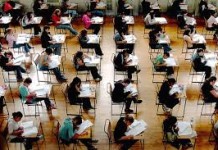
 The decline in overall college enrollment has slowed this spring, according to new data the National Student Clearinghouse Research Center released today. And some details are emerging about the groups of students who are less likely to attend college in declining sectors.InsideHigher Ed reports that ‘Overall enrollment this spring is down 0.8 percent compared to a year ago. That slide follows two years of previous declines the clearinghouse identified. The loss of students peaked last spring with a 2.3 percent decrease.
“The clearinghouse data cover 96 percent of all enrollments in the United States. The nonprofit group conducts student verification and research services for colleges, which turn over their data voluntarily. The clearinghouse publishes national enrollment estimates every six months, breaking out numbers by sectors and states, as well as on students’ age groups, gender and part- or full-time status.
“With estimates from the current term, the clearinghouse gives a more timely view of enrollments than the U.S. Department of Education can with its data. However, the clearinghouse does not publicly release figures about individual institutions.
The overall trends in the latest report aren’t surprising. More students attend college during a recession, and an enrollment boom typically tapers off as the economy begins to rebound. Eventually enrollments stabilize and begin to climb again at a steadier rate.
This spring private, nonprofit colleges saw the biggest increase, with a 2 percent gain. At a time when some enrollment-driven private colleges have been struggling and many others fretting, those numbers may come as welcome news. Continue reading “College Enrollment bottoming out”
 toward an image that is both romantic and pathetic, of a person too pure, and also just too impractical, to make it in the world. When that person ceases to starve, he or she can always be labeled a sellout. You’re not supposed to be in it for the money.

 For the vast majority of Americans — myself included — a college education remains the key to an engaging, financially viable life. Nothing should be done to disrupt this trusted vehicle by zeroing in on the undergraduate degree solely as preparation for a first job whose “of-the-moment” skills and knowledge are likely be eclipsed in short order in a rapidly changing economy.




 to death while handcuffed by off-duty deputies working as security guards in a Maryland movie theater. They are just two of many people with psychiatric or intellectual disabilities killed by law enforcement.
 abundance unthinkable just a generation or two ago. That indisputable economic fact has become a subject of bitter political debate this year, half a century after President Lyndon B. Johnson declared a war on poverty.


 fight against racial, gender & LGBT inequality,” according to a press release.
 Tucked away in a document on reducing sexual assault at school – part of an unprecedented effort by the Obama administration to address such abuse – the Department of Education included a historic guideline extending federal civil rights protections to transgender students on Tuesday.