Looks remarks damage women candidates

imagesObjectifying comments about women running for office damage their candidacies, according to two recent studies. NPR reports that “Any mention — positive or negative — of a woman’s looks, hurts her chances with voters. That’s according to two new surveys commissioned by Women’s Media Center “Name It, Change It” project.

“In the survey on media coverage of women candidates’ appearance, conducted by Celinda Lake of Lake Research Partners and Robert Carpenter of Chesapeake Beach Consulting, the research used actual quotes about women candidates from media coverage of the 2012 elections and demonstrates that when the media focuses on a woman candidate’s appearance, she pays a price in the polls,” the center said in a press release. “This finding held true whether the coverage of a woman candidate’s appearance was framed positively, negatively or in neutral terms.”

“Another study presented participants with profiles of “candidates” Jane Smith and Dan Jones. If participants only read the profiles, the woman emerged with an edge. But that edge was eclipsed immediately, as soon as physical descriptors — like “Smith dressed in a brown blouse, black skirt, and modest pumps with a short heel…” — were added to a “news story.”

“The survey also found that when the women themselves or a surrogate called out the sexist language, they earned back some support. That was the case even when the respondents did not read any of the sexist language.

Celinda Lake, one of the researchers, told Poynter that the bottom line is that “women candidate pay a real price” when the media takes notice of their appearence.

“Even what we thought was benign coverage about how a woman dresses has a negative impact on her vote and whether voters perceive her as in touch, likeable, confident, effective, and qualified. And, in close races, sexist coverage on top of the attacks that every candidate faces can make the difference between winning and losing.”

“Of course, this study gives some context to the uproar over Obama’s comments about California Attorney General Kamala Harris, last week. The study was conducted online last month. It has a margin of error of 2.5 percent.”

 

http://www.npr.org/blogs/thetwo-way/2013/04/08/176613966/study-any-description-of-womans-appearance-hurts-with-voters?ft=1&f=1001

A “Ministry for Men” Proposal

Getting unfairly greater pay for equal work, having too much responsibility, occupying a disproportionately large number of leadership positions – might this be more than men can handle? Jenna Price comments in today’s Canberra Times that there may be a solution in a “Ministry for Men”images-4

“For that matter, I might just have a go at it myself.

“And if I were the Minister for Men, there are some clear areas where I could make a difference. Blokes wouldn’t have to shoulder the responsibility for occupying 90 per cent of all the board seats in the top 200 companies listed on the Australian Stock Exchange. That’s far too much of a burden for any one group.

“I’d slash wages for men, so they wouldn’t have to be paid more to do the same work as women any longer. Why advocate for a pay cut? Because the gender pay gap is a trick to restrict mens’ roles. When you get paid more to do the same work as someone else, it leads to all sorts of expectations. It leads to the expectation that men will never want to stay home with their kids – or work part-time – or take time off to care for their elderly parents. We know that’s just not true any more; and we can’t pigeonhole men any longer. They’re men, not pigeons*, and they have a right to live their lives as God intended. Continue reading “A “Ministry for Men” Proposal”

“Accept” and “tolerate” not good enough

Last month U.S. Sen. Rob Portman (R-Ohio) reversed his stance on gay marriage, largely because his son is gay, and although I felt like I should have been happy about it, it left a bad taste in my mouth. Of course, I’m happy that there is another senator willing to support the civil rights of all U.S. citizens, but my knee-jerk reaction was, “Oh, you support gay marriage now because it directly affects your family? Well, guess what, Mr. Senator: The rest of our kids matter too.” I know that that thought was not generous, and I’m not proud of it, but my frustration is real, and the problem of homophobia is real, reports Huffington Post

“Then U.S. Rep. Matt Salmon (R-Ariz.) made his own announcement. It turns out that he has a gay son too, but his opposition to marriage equality is not going to change. He also made a point to say that he loves his son. A few days later his son did an interview in which he spoke about how his father loves him and is incredibly tolerant. Now I wasn’t frustrated; I was furious. I was furious at this father for putting his politics before the rights of his kid, and I was furious that his child felt the need to defend his father when his father sure as hell isn’t defending him.

“But when I let my temper simmer down and took a step back, I saw that this is an issue that goes far beyond two GOP politicians and their kids.

“I’ve been fortunate enough to hear from gay kids all across the country. A lot of them don’t have supportive families, but some do. I cherish the good stories, but there’s often a moment in those good stories that makes my heart hurt: when they tell me how happy they are that their parents “still” love them — because all those kids knew that not loving them was an option. Continue reading ““Accept” and “tolerate” not good enough”

Abistinence only is driving up STDs

images-3Late last month I interviewed a woman who was 19 when she contracted the herpes simplex virus (HSV1) genitally while still identifying as a virgin. Yahoo News says that  “No one ever told me you could contract an STD by [having] oral sex,” she said. “I thought I was being responsible, because I was saving myself for marriage…I come from a very religious background, and that’s what I was taught. Good girls don’t practice safe sex; they don’t have sex until marriage.”

“Coming to terms with the realization that there were still risks, despite abstaining from vaginal intercourse, this young woman now knows she was lacking some basic knowledge that she needed to make informed decisions about her sexual health.What would have helped her? Comprehensive sex education would have helped.

“We weren’t told about that stuff,” she told me. “Sex ed was literally a bunch of kids giggling about gross slides and our teacher telling us not to do it. Some of us even signed a paper saying we wouldn’t until we were married. So I only had oral sex, and look where that got me.” Now 23, she wishes she’d been armed with a comprehensive sexual education program, as opposed to the abstinence-only approach she received from her high school in South Carolina.

“When I asked her if she thought more thorough sex education in school would have influenced her behavior, she replied enthusiastically. “Yes, definitely! It’s not like I didn’t listen to or respect my teachers. I just didn’t know. I mean, no one told us to use some kind of barrier with oral sex; they didn’t want us to have sex at all. Why would they tell us how to do it safely?”


More: http://news.yahoo.com/abstinence-only-sex-ed-driving-std-rates-203137849.html

Class more than upstairs/downstairs

Class in Britain used to be a relatively simple matter, or at least it used to be treated that way. It came in three flavors — upper, middle and working — and people supposedly knew by some mysterious native sixth sense exactly where they stood, reports today’s New York Times “As the very tall John Cleese declared to the less-tall Ronnie Corbett in the famous 1966 satirical television sketch meant to illustrate class attitudes in Britain — or, possibly, attitudes toward class attitudes — “I look down on him, because I am upper class. images-2

“It is not as easy as all that, obviously. The 2010 election was enlivened at one point by a perfectly serious discussion of whether David Cameron, now the prime minister, counted as upper upper-middle class, or lower upper-middle class. But on Wednesday, along came the BBC, muddying the waters with a whole new set of definitions.

“Having commissioned what it called The Great British Class Survey, an online questionnaire filled out by more than 161,000 people, the BBC concluded that in today’s complicated world, there are now seven different social classes. (“As if three weren’t annoying enough,” a woman named Laura Phelps said on Twitter.) These range from the “elite” at the top, distinguished by money, connections and rarefied cultural interests, to the “precariat” at the bottom, characterized by lack of money, lack of connections and unrarefied cultural interests. Continue reading “Class more than upstairs/downstairs”

Teaching empathy in schools

 Restorative justice is a concept for helping students develop empathy and social concern. Today’s New York Times carries the story excerpted below on the topic:

“There is little down time in Eric Butler’s classroom.“My daddy got arrested this morning,” Mercedes Morgan, a distraught senior, told the students gathered there.

“Mr. Butler’s mission is to help defuse grenades of conflict at Ralph J. Bunche High School, the end of the line for students with a history of getting into trouble. He is the school’s coordinator for restorative justice, a program increasingly offered in schools seeking an alternative to “zero tolerance” policies like suspension and expulsion.

“The approach now taking root in 21 Oakland schools, and in Chicago, Denver and Portland, Ore., tries to nip problems and violence in the bud by forging closer, franker relationships among students, teachers and administrators. It encourages young people to come up with meaningful reparations for their wrongdoing while challenging them to develop empathy for one another through “talking circles” led by facilitators like Mr. Butler. Continue reading “Teaching empathy in schools”

Ellen to return as Dory

“I have waited for this day for a long, long, long, long, long, long time,” said Ellen DeGeneres, images-1who voices Dory, in a statement. “I’m not mad it took this long. I know the people at Pixar were busy creating ‘Toy Story 16.’ But the time they took was worth it. The script is fantastic. And it has everything I loved about the first one: It’s got a lot of heart, it’s really funny, and the best part is—it’s got a lot more Dory.”

You get the idea, Ellen as Dory will be in production soon. According to Huffington Post,  Disney and Pixar announced Tuesday that “Finding Nemo” is getting a sequel with the upcoming release of “Finding Dory.”

“Finding Dory” is reportedly set on the California coastline, one year after “Finding Nemo.” The animated flick will include many of the characters from the first film, such as Marlin, the Tank Gang, and of course, Nemo. Continue reading “Ellen to return as Dory”

Counting liberals at Trader Joe’s

The cliché that liberals shop at Trader Joe’s, while conservatives prefer Walmart, is no doubt overstated. But where would the perception come from?

Newly published research provides a compelling answer: brand-name products. Conservatives gravitate toward them, and Walmart, unlike Trader Joe’s, is packed with them, reports Salon.com.images

“That provocative conclusion can be drawn from a study in the journal Psychological Science. A research team led by Vishal Singh of New York University’s Stern School of Business has discovered a relationship between voting behavior, high levels of religiosity, and “seemingly inconsequential product choices.”

“They argue that your decision to vote for a certain candidate, and purchase a particular brand of detergent, springs from the same basic impulse:“Our empirical results, based on extensive field data, provide strong evidence that more conservative ideology is associated with higher reliance on established national brands (as opposed to generics) and a slower uptake of new products.”

“These tendencies are consistent with traits typically associated with conservatism, such as aversion to risk, skepticism about new experiences, and a general preference for tradition, convention, and the status quo.”The researchers used a comprehensive database that tracks weekly store sales of thousands of products. Focusing on 416 counties which collectively represent 47 percent of the U.S. population, they calculated the market share of generics in 26 categories, including coffee, deodorant, and peanut butter. Continue reading “Counting liberals at Trader Joe’s”

Most say immigrants should be allowed to stay

A new survey finds that seven-in-ten Americans (71%) say there should be a way for people in the United States illegally to remain in this country if they meet certain requirements, while 27% say they should not be allowed to stay legally, reports the Pew organization.

“Most who favor providing illegal immigrants with some form of legal status –43% of the public – say they should be allowed to apply for citizenship, but 24% of the public says they should only be allowed to apply for legal residency.images-1

“Majorities across all demographic and political groups say there should be a way for illegal immigrants who meet certain requirements to stay in the U.S. legally. Among those who favor providing legal status, the balance of opinion is in favor of allowing those here illegally who meet the requirements to apply for citizenship. However, no more than about half in any demographic group supports permitting illegal immigrants to apply for citizenship. Continue reading “Most say immigrants should be allowed to stay”

Half of Christians expect Jesus before 2050

images-1As Christians worldwide prepare for Easter, a time of reflection on Jesus’ death and a celebration of his resurrection, many seem to be looking forward as well, reports Slate.com

“A Pew Research Center survey on the religious beliefs of Christians in the United States, shows that about half believe Jesus will either definitely or probably return in the next 40 years.

“Theologians and scholars have debated the Second Coming for centuries, arguing over when it will happen, if it can be predicted, and signs showing its imminent arrival. The Bible states that no one but God knows when Jesus will return and that the return will be swift and unexpected: “No one knows about that day or hour, not even the angels in heaven, nor the Son, but only the Father. Be on guard! Be alert! You do not know when that time will come.” Continue reading “Half of Christians expect Jesus before 2050”

How not to wreck California’s universities

Things must be pretty bad in California if it takes the New York Tims to assemble a coherent argument to save their universities. But this is what happened today in an NYT editorial stating that current plans to force the universities to shift to online teaching will probably wreck the UC system, fail students who need the university most, and damage the California economy to boot:images

“Even before the recession hit, the public colleges and universities that educate more than 70 percent of the nation’s students were suffering from dwindling state revenue. Their response, not surprisingly, was to raise tuition, slash course offerings and, in some cases, freeze or even reduce student enrollment. The damage was acute in California, whose once-glorious system of higher education effectively cannibalized itself, shutting out a growing number of well-qualified students.

“The same California State Legislature that cut the higher education budget to ribbons, while spending ever larger sums on prisons, now proposes to magically set things right by requiring public colleges and universities to offer more online courses. The problem is that online courses as generally configured are not broadly useful. They work well for highly skilled, highly motivated students but are potentially disastrous for large numbers of struggling students who lack basic competencies and require remedial education. These courses would be a questionable fit for first-time freshmen in the 23-campus California State University system, more than 60 percent of whom need remedial instruction in math, English or both. Continue reading “How not to wreck California’s universities”

Racing the light with Rachel

Rachel Maddow ended her Friday show by celebrating what she called an historic week in the gay rights movement in America.

In a poetic monologue that seemed at times to leave her slightly choked up, Maddow compared the effect of the work done by pioneers in the fight for LGBT equality–from now-dead activists of the 1970s to Thea Spyer, the late wife of Edie Windsor, whoselawsuit against the Defense of Marriage Act was heard by the Supreme Court this week–to the light that reaches the night sky from stars that have actually been gone for years, reports Huffington Post today.images-1

“There are all sorts of people and all sorts of fights that technically are not still around,” she said. “But they live, and we can see them. We can see their light in some of the biggest-deal and most difficult things that we do today. Continue reading “Racing the light with Rachel”

College students worry … and think

Today’s college age generation has been disillusioned by a decade of recession, the decline of the U.S. in the world, and a general loss of confidence in democratic capitalism as a promise for their futures.images

Hence they are less likely to buy into the idealism and work ethic of 90s kids. But who knows, maybe they have better critical instincts. David Brooks is worried about all of this, as he writes in today’s New York Times:

“Twelve years ago, I wrote a piece for The Atlantic, called “The Organization Kid,” about the smart, hard-working, pleasant-but-cautious achievatrons who thrive in elite universities. Occasionally, somebody asks me how students have changed since then. I haven’t been perceptive enough to give a good answer.

“But, this year, I’m teaching at the Jackson Institute for Global Affairs at Yale, and one terrifically observant senior, Victoria Buhler, wrote a paper trying to capture how it feels to be in at least a segment of her age cohort. She’s given me permission to quote from it. Buhler points out that the college students of 12 years ago grew up with 1990s prosperity at home, and the democratic triumph in the cold war abroad. They naturally had a tendency to believe deeply “in the American model of democratic capitalism, which created all men equal but allowed some to rise above others through competition.” Continue reading “College students worry … and think”

Those naughty boomers

Some time back, researchers writing in The New England Journal of Medicine decided to ask older Americans about their sex life and discovered something interesting: very often, they have one.

When Robin G. Sawyer, an associate professor in the University of Maryland School of Public Health, shares this information with his students, some seem horrified, reports today’s New York Timesimages

“Maybe they are troubled by the thought of “wrinklies,” as a character in the Christopher Buckley novel “Boomsday” calls them, being intimate. But maybe what gets them is just how often many baby boomers boom — at least two or three times a month, the study found. “That’s better than some of my undergraduates,” Dr. Sawyer said. Continue reading “Those naughty boomers”

Arizona backs down on transgender law

Faced with an outcry from advocacy groups, an Arizona lawmaker has changed his proposed legislation that would have made it a crime for a transgendered person to use a bathroom other than his or her birth sex, reports the Huffington Post.

“The new bill by state Rep. John Kavanagh ditches that effort and instead seeks to shield businesses from civil or criminal liability if they ban people from restrooms that don’t match their birth sex. The House committee Kavanagh chairs voted to advance the so-called “bathroom bill” late Wednesday on a 7-4 party-line vote as a crowd broke out in chants of “shame, shame, shame.”imgres-6

“The hearing room was packed with people from the LGBT community who opposed the bill and complained that even the revised version was based on fear. Patty Medway, a transgendered woman who was born a man, said she’s been using female bathrooms for years without a problem. She called on Kavanagh to back away from his effort.

“I’ve been using washrooms for 15 years and I don’t want to be discriminated against, and I’m scared to go to a male washroom,” she said.The conservative Republican said he listened to the criticism of what one local television station dubbed the “Show Me Your Papers Before You Go Potty” bill.

“The revised bill is designed to shield businesses from lawsuits while protecting people from being exposed to what he described as “naked men in women’s locker rooms and showers,” Kavanagh said. It doesn’t prohibit businesses from allowing transgender people from using the restroom they want. To Kavanagh’s point that he worried about young girls being exposed to transgendered people in restrooms, Medway said that just doesn’t happen.”


Full story: http://www.huffingtonpost.com/2013/03/27/arizona-transgender-bathroom-bill_n_2967997.html

Publishing’s new love affair with bullying

Nobody likes a bully — but these days the book industry loves having them to kick around.

Publishing houses are flooding the market with titles that tackle bullying, reports today’s New York Times. imgres-5“The books are aimed at all age groups — from “Bully,” a picture book for elementary-grade students, to the “The Bully Book,” for middle school children, about an average kid who suddenly becomes everyone’s favorite victim, to “Sticks and Stones” by Emily Bazelon, a recent release for adults that includes both stories and analysis. According toWorldCat, a catalog of library collections worldwide, the number of English-language books tagged with the key word “bullying” in 2012 was 1,891, an increase of 500 in a decade. Continue reading “Publishing’s new love affair with bullying”

How one war on terror turned against women

imgres-4“Once, as a reporter, I covered wars, conflicts, civil wars, and even a genocide in places like Vietnam, Angola, Eritrea, Rwanda, and the Democratic Republic of Congo, keeping away from official briefings and listening to the people who were living the war,.”  writes Victoria Brittain in a recent edition of Le Monde. “In the years since the Bush administration launched its Global War on Terror, I’ve done the same thing without ever leaving home.

“In the last decade, I didn’t travel to distant refugee camps in Pakistan or destroyed villages in Afghanistan, nor did I spend time in besieged cities like Iraq’s Fallujah or Libya’s Misrata. I stayed in Great Britain. There, my government, in close conjunction with Washington, was pursuing its own version of what, whether anyone cared to say it or not, was essentially a war against Islam. Somehow, by a series of chance events, I found myself inside it, spending time with families transformed into enemies. Continue reading “How one war on terror turned against women”

Brain scans that predict criminality?

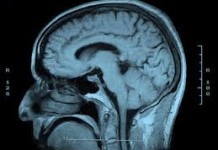
Brain scans of convicted felons can predict which ones are most likely to get arrested after they get out of prison, scientists have found in a study of 96 male offenders, reports Wired Science today

“It’s the first time brain scans have been used to predict recidivism,” said neuroscientist Kent Kiehl of the Mind Research Network in Albuquerque, New Mexico, who led the new study. Even so, Kiehl and others caution that the method is nowhere near ready to be used in real-life decisions about sentencing or parole.imgres-3

“Generally speaking, brain scans or other neuromarkers could be useful in the criminal justice system if the benefits in terms of better accuracy outweigh the likely higher costs of the technology compared to conventional pencil-and-paper risk assessments, says Stephen Morse, a legal scholar specializing in criminal law and neuroscience at the University of Pennsylvania. The key questions to ask, Morse says, are: “How much predictive accuracy does the marker add beyond usually less expensive behavioral measures? How subject is it to counter-measures if a subject wishes to ‘defeat’ a scan?” Continue reading “Brain scans that predict criminality?”

And all is always now

imgres-2By now, you’ve probably heard people call themselves “slaves” to their phones or their computers. We all know what that means — but why are we allowing ourselves to be slaves to the very instruments of technology we’ve created?

Douglas Rushkoff, who spends his days thinking, writing and teaching about media culture, says it’s time for people to stop chasing every ping and start using technology in a way that makes us feel more free. NPR.org today discusses “Rushkoff’s latest work is called Present Shock: When Everything Happens Now. He joined NPR’s Audie Cornish to talk about the book.

“Most simply, ‘present shock’ is the human response to living in a world that’s always on real time and simultaneous. You know, in some ways it’s the impact of living in a digital environment, and in other ways it’s just really what happens when you stop leaning so forward to the millennium and you finally arrive there.

“In my life, it’s sort of the experience of being on Facebook and seeing everyone from my past suddenly back in my present. And the inability to distinguish between who may have been friends of mine in second grade, and people who I’ve met just yesterday, and people who are actually significant relationships. That collapse of my whole life into one moment, where every ping, every vibration of my phone might just pull me out of whatever it is I’m doing, into something else that seems somehow more pressing on the moment.” Douglas Rushkoff founded the Narrative Lab at NYU’s Interactive Telecommunications Program, and lectures about media, art, society and change at conferences and universities around the world. He lives in Brooklyn with his wife and daughter.

” ‘Digiphrenia’ is really the experience of trying to exist in more than one incarnation of yourself at the same time. There’s your Twitter profile, there’s your Facebook profile, there’s your email inbox. And all of these sort of multiple instances of you are operating simultaneously and in parallel. And that’s not a really comfortable position for most human beings.It’s interesting — I was at Disney World and I saw this little girl who was looking at one of those signs that said, like, ‘Forty minutes until you get on this ride,’ and she looked up to her dad, and she said, ‘What’s a minute?’ And I thought that, you know, in the industrial age, and in analog clocks, a minute is some portion of an hour, which is some portion of a day. In the digital age, a minute is just a number. It’s just 3:23. It’s almost this absolute duration that doesn’t have a connection to where the sun is or where our day is. It’s this very abstracted way of experiencing time. And what I’m arguing in Present Shock is that that timelessness is very characteristic of living in the digital age, in the age that we’re in. And it’s very hard for us to orient ourselves, to look forward to things, to join movements with goals, to invest in the future, to think about our long-term careers. We’re just kind of in this moment of pause.”

More at: http://www.npr.org/2013/03/25/175056313/in-a-world-thats-always-on-we-are-trapped-in-the-present

The new corporate feminism

The book Lean In: Women, Work and the Will to Lead has been getting a lot of attention recently. In a thoughtful piece in Al Jazeera today, Catherine Rottenberg argues that the “new” brand of feminism offered by such books is devoid of concerns for social justice.imgres-1

“A new trend is on the rise. Suddenly high-powered women are publically espousing feminism. In her recently published book, Lean In: Women, Work and the Will to Lead Facebook’s chief operating officer Sheryl Sandberg advocates for a new kind of feminism, maintaining that women need to initiate an “internalised revolution”.

“Sandberg’s feminist manifesto comes on the heels of Ann-Marie Slaughter’s much-discussed Atlantic opinion piece, “Why Women Still Can’t Have It All”, which rapidly became the most widely read essay in the magazine’s history. In her piece, Slaughter explains why professional women are still finding it difficult to balance career demands with their wish for an active home life: social norms and the inflexibility of US workplace culture continue to privilege career advancement over family.  Continue reading “The new corporate feminism”