Walmart strike widens

Wal-Mart workers and supporters launched protests in at least 15 cities Thursday, urging the world’s largest retailer provide higher wages, better jobs and the right to unionize.

OUR Wal-Mart, a coalition including Wal-Mart workers, community organizers and the United Food & Commercial Workers organized day-long protests, urging Wal-Mart to pay full-time wages of $25,000 a year, or $12 an hour, reports USA today.

“It says many of Wal-Mart’s 1.3 million associates are part-time employees averaging just $8.80 an hour.

“The Wal-Mart protests – which follow last week’s broader, widespread strikes among fast-food industry workers seeking $15 an hour wages from fast food chains – were scheduled for Los Angeles, San Francisco, New York City, Seattle, Chicago, Denver, Boston, Orlando, Minneapolis and Washington D.C., where Wal-Mart is threatening to cut expansion if it’s required to pay a city mandated “living wage” of at least $12.50 an hour.

“At least three current or former Wal-Mart employees were arrested in New York City Thursday morning for disorderly conduct as they attempted to deliver a petition to the office of Wal-Mart director Chris Williams. The independent board member is CEO of New York-based investment bank Williams Capital Management Trust. About three dozen protesters, some wearing green shirts with OUR Wal-Mart stenciled on them, participated in the rally.

“Protesters also planned to rally outside of Yahoo CEO Marissa Mayer’s San Francisco apartment building. Mayer was appointed to Wal-Mart’s board of directors in 2012. Wal-Mart spokesperson Brooke Buchanan said the protests were having little impact on its 4,600 U.S. stores. Continue reading “Walmart strike widens”

White women live shorter lives in the south

Everything about Crystal’s life was ordinary, except for her death, begins a story in today’s American Prospect.images

“She is one of a demographic—white women who don’t graduate from high school—whose life expectancy has declined dramatically over the past 18 years. These women can now expect to die five years earlier than the generation before them. It is an unheard-of drop for a wealthy country in the age of modern medicine. Throughout history, technological and scientific innovation have put death off longer and longer, but the benefits of those advances have not been shared equally, especially across the race and class divides that characterize 21st–century America. Lack of access to education, medical care, good wages, and healthy food isn’t just leaving the worst-off Americans behind. It’s killing them.

“The journal Health Affairs reported the five-year drop in August. The article’s lead author, Jay Olshansky, who studies human longevity at the University of Illinois at Chicago, with a team of researchers looked at death rates for different groups from 1990 to 2008. White men without high-school diplomas had lost three years of life expectancy, but it was the decline for women like Crystal that made the study news. Previous studies had shown that the least-educated whites began dying younger in the 2000s, but only by about a year. Olshansky and his colleagues did something the other studies hadn’t: They isolated high-school dropouts and measured their outcomes instead of lumping them in with high-school graduates who did not go to college.

“The last time researchers found a change of this magnitude, Russian men had lost seven years after the fall of the Soviet Union, when they began drinking more and taking on other risky behaviors. Although women generally outlive men in the U.S., such a large decline in the average age of death, from almost 79 to a little more than 73, suggests that an increasing number of women are dying in their twenties, thirties, and forties. “We actually don’t know the exact reasons why it’s happened,” Olshansky says. “I wish we did.” Continue reading “White women live shorter lives in the south”

The British are …

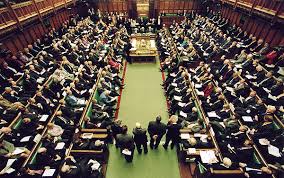
Earlier this summer Britain announced the online pornography would be blocked from people’s home unless requested by internet subscribers. Now another story has surfaced, as reported today by the BBC:

“More than 300,000 attempts were made to access pornographic websites at the Houses of Parliament in the past year, official records suggest. It is unclear whether MPs, peers or other staff are responsible, House of Commons officials said.

imgres

“The figures were not all “purposeful requests” and may have been exaggerated by third-party software and websites that reload themselves, they added. About 5,000 people work on the parliamentary estate. The data was released following a Freedom of Information request by Huffington Post UK, which published the story under the headline “Oh Yes, Minister!” on its homepage. However, the figures vary wildly: in November, there were 114,844 attempts to access websites classed as pornographic, but just 15 in February.

“A Commons spokeswoman said: “We do not consider the data to provide an accurate representation of the number of purposeful requests made by network users.” This was because there was a “variety of ways in which websites can be designed to act, react and interact and due to the potential operation of third party software,” she said. Some of the hits may have been registered by websites that generate a number of views during a single visit, or those that automatically link to other sites via pop-ups, she explained.”


More at: http://www.bbc.co.uk/news/uk-politics-23954447


China begins using drones

In building drones that kill people, the U.S. has a couple-decade head start on China.

But when it comes to domestic uses, U.S. businesses are hamstrung because the Federal Aviation Administration (FAA) isn’t required to issue commercial drone rules until 2015. The Atlantic carries a story about this:

“One of China’s biggest delivery companies is tinkering with using drones—with Chinese government permission. SF Express is testing a drone it has built for delivering packages to remote areas, according to Chinese media reports. The drone can hit an maximum altitude of 328 feet and deliver parcels within two meters of its target. It’s not clear what sort of weight these puppies can handle, but Beijing journalists calculated that it probably can’t carry more than 6.6 pounds.

T”he news broke yesterday morning, after a Sina Weibo user noticed what looked like a UFO hovering above a street in Dongguang, in southern China, and after noticing a SF Express logo, posted images online. In July, a Shanghai bakery launched aerial cake delivery—or “pie in the sky,” as the Telegraph put it (video below). However, as an anonymous government official told the Shanghai Daily at the time, businesses that want to use drones must be granted approval from the local civil aviation authorities first. The bakers forgot to do that, apparently. However, the Dongguan police said that, except during certain sensitive times, commercial operators who receive permission from the civil aviation regulator and air traffic control are allowed to fly drones. SF Express says it’s strictly complying with the policies.

“Drone delivery undoubtedly has a certain appeal to the Chinese authorities, who are increasingly struggling to control both traffic and pollution in China’s major cities. On top of that, e-commerce is growing much faster than delivery infrastructure in rural and mountainous parts of China, such that logistics systems are emerging as a big area of investment. In fact, a consortium including CITIC Capital took a 25 percent stake in SF Express in late August. Continue reading “China begins using drones”

Who makes political scientists

A handful of  top universities crank out most of the nations’ political science faculty … Harvard, Princeton, Stanford and Michigan, to be precise.

Last year, a study in Georgetown Public Policy Review exposed the extent to which a relatively small number of graduate programs in political science dominate placement in Ph.D.-granting departments., reports InsideHigher Ed. imgres

“The study looked at the 116 universities ranked by U.S. News & World Report for political science graduate programs, and examined where all of the tenure-track or tenured faculty members earned their doctorates. The top four institutions in the magazine’s rankings of departments — Harvard, Princeton and Stanford Universities and the University of Michigan — were the Ph.D. alma maters of 616 of the political scientists at the 116 universities (roughly 20 percent of the total). The top 11 institutions were collectively responsible for the doctoral education of about half of those in tenured or tenure-track positions at the 116 universities.

“On Saturday, the author of that study — Robert L. Oprisko of Butler University — presented expanded findings here at the annual meeting of the American Political Science Association. The paper argues not only that some departments may have more historical dominance but that others may be on the rise right now (judging from the number of assistant professors they have placed). While Oprisko is critical of a system that seems to place so much emphasis on Ph.D. pedigree, he also argues that this information needs wider circulation to help would-be graduate students make informed choices. (Oprisko earned his Ph.D. at Purdue University, not one of the dominant institutions). The paper — also by Kirstie L. Dobbs of Loyola University Chicago and Joseph DiGrazia of Indiana University — may be found at the website of the Social Science Research Network. Continue reading “Who makes political scientists”

Nations of addicts

Watch out America, a new study suggest that Great Britain is a society of addicts.

The Guardian reports it thus: images-1

“Othello, act 2, scene 3. As part of his evil plan, Iago, you will remember, is trying to get Cassio drunk, singing a song to get him rowdy. “I learned it in England,” he says, “where, indeed, they are most potent in potting: your Dane, your German, and your swag-bellied Hollander – Drink, ho! – are nothing to your English.” Ever the entertainer, Shakespeare knew that you could always get a cheer from a crowd in this country by complimenting them on their drinking.

“But why is it a compliment? The crippling intensity of one’s hangover the morning after, the unwiseness of one’s antics the night before, what makes these things that Britons boast about? The Centre for Social Justice, founded by Iain Duncan Smith, has just released a report that argues for it to be a matter of shame. “Britain is the addicted man of Europe,” the authors say. “Growing sections of society are dependent upon mind-altering substances.”

“The report itself is a muddled, shrill and selective document, determined to bring together issues such as binge drinking, heroin addiction, legal highs, cannabis smoking and alcoholism, which have different levels of seriousness, patterns of use and potential for harm. Yet at the heart of it lies a truth: Britain is a nation addicted, not necessarily to drugs oralcohol per se, but to excess itself.

“Here the facts are not in question. Although rates of drug use are broadly stable or falling, rates of opiate addiction are high in European terms, and in its penchant for party drugs Britain leads the world. Last year’s World Drugs report, which ranked countries on the prevalence of different drugs, put the Isle of Man and Scotland at numbers one and two for cocaine use, with England fourth and Wales sixth. All four figured in the top 10 for ecstasy use as well. Britain also appears to be a hub for the development of new synthetic drugs, often known as “legal highs”, because our laws take a while to ban them. Continue reading “Nations of addicts”

The kids may not be all right

Despite recent gains against substance abuse by American teens, hundreds of thousands of them use marijuana and alcohol on a given day, U.S. health officials reported Thursday.images

On a typical day, WebMD reports, “an estimated 881,684 kids aged 12 to 17 smoke cigarettes, 646,707 use marijuana and 457,672 drink alcohol, according to a report by the U.S. Substance Abuse and Mental Health Services Administration (SAMHSA).

“The number of teens smoking pot on a given day could almost fill the 250,000-seat Indianapolis Speedway two and a half times, the report pointed out.

“This data about adolescents sheds new light on how deeply substance use pervades the lives of many young people and their families,” SAMHSA administrator Pamela Hyde said in an agency news release. “While other studies indicate that significant progress has been made in lowering the levels of some forms of substance use among adolescents in the past decade, this report shows that far too many young people are still at risk.”

“The report also said that on an average day:

  • 7,639 kids aged 12 to 17 drink alcohol for the first time,
  • 4,594 use an illicit drug for the first time,
  • 4,000 use marijuana for the first time,
  • 3,701 smoke cigarettes for the first time,
  • 2,151 misuse prescription pain relievers for the first time. Continue reading “The kids may not be all right”

Christie signs conversion therapy ban

New Jersey has joined California in a ban on conversion therapy.

Gov. Chris Christie signed a bill Monday barring licensed therapists from trying to turn gay teenagers straight, making New Jersey the second state to ban conversion therapy, along with California.

The move is the latest example of the potential 2016 Republican presidential candidate steering a moderate course.

The governor said the health risks of trying to change a child’s sexual orientation, as identified by the American Psychological Association, trump concerns over the government setting limits on parental choice. “Government should tread carefully into this area,” he said in the signing note, “and I do so here reluctantly,” reports SF Gate

“The decision marked another instance when Christie staked out a moderate position on a hot-button social issue as he seeks a second term in a Democratic-leaning state. It also offers more evidence that the popular governor is positioning himself as a pragmatist who shuns more conservative elements within his party.

“Christie found middle ground on medical marijuana for children when he agreed Friday to allow growers to cultivate additional strains, and for marijuana to be made in an edible form for chronically ill children. Last week, Christie vetoed a bill banning .50-caliber rifles that was vigorously opposed by firearms rights advocates and gutted a proposed overhaul of the state’s gun permit law. Recently, he signed 10 less significant gun measures the Democrat-led Legislature passed after last year’s deadly school shooting rampage in Newtown, Conn. Continue reading “Christie signs conversion therapy ban”

It’s not Alzheimer’s

Scientists have good news for all the older adults who occasionally forget why they walked into a room – and panic that they are getting Alzheimer’s disease, reports Reuters.

“Not only is age-related memory loss a syndrome in its own right and completely unrelated to that dread disease, imgres-1but unlike Alzheimer’s it may be reversible or even preventable, researchers led by a Nobel laureate said in a study published on Wednesday.

“Using human brains that had been donated to science as well as the brains of lab mice, the study for the first time pinpointed the molecular defects that cause cognitive aging.

“In an unusual ray of hope for a field that has had almost nothing to offer older adults whose memory is failing, the study’s authors conclude that drugs, foods or even behaviors might be identified that affect those molecular mechanisms, helping to restore memory.

“Any such interventions would represent a significant advance over the paltry offerings science has come up with so far to prevent memory decline, such as advice to keep cognitively active and healthy – which helps some people, but not all, and has only a flimsy scientific foundation. By identifying the “where did I park the car?” molecule, the discovery could also kick-start the mostly moribund efforts to develop drugs to slow or roll back the memory lapses that accompany normal aging.

“This is a lovely set of studies,” said Molly Wagster of the National Institute on Aging, an expert on normal age-related memory decline who was not involved in the new study. “They provide clues to the underlying mechanism of age-related memory decline and will, hopefully, move us down the road toward targeted therapeutics.” Continue reading “It’s not Alzheimer’s”

E-cigarettes hit snags in California

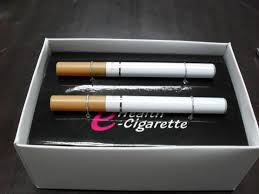
E-cigarettes have hit some snags in California.imgres

With fresh memories of how rapidly marijuana dispensaries multiplied and generated controversy, many cities want to slow the spread of electronic cigarette stores until they can figure out the ramifications, reports the LA  Times:

“It’s a fast-growing business: A report by Wells Fargo Securities this summer estimated brick-and-mortar sales for e-cigarettes will top $1 billion this year and bring in an additional $700 million in online sales.

“For many, vaping is a way to cut back on smoking. For others it’s a trendy option that offers varied flavors similar to hookahs and lacks the smell left behind by cigarettes. Although businesses and cities are starting to look at e-cigarettes more closely, the devices can still be used at many more places than allow smoking. Although the U.S. Food and Drug Administration hasn’t weighed in on the effects of secondhand vapor, the essentially odorless cloud is far less noticeable than exhaled smoke. But as with pot shops, some have raised concerns about the potential clientele of electronic cigarette stores. And an even larger debate hinges on whether the myriad restrictions that many cities impose on smokers should also apply to vapers. For Jim Basham, Seal Beach’s director of community development, the distinguishing line between pot dispensaries and vaping outlets is a bit blurry. He’s seen e-cigarette stores evolve into hemp shops — and draw with them a ragtag crowd.

“You have other folks with different intentions,” Basham said, “and you can have secondary adverse effects, like crime.” Continue reading “E-cigarettes hit snags in California”

The gendered price of success

This is depressing, but not exactly shocking. New research suggests that many men get depressed when women in their lives thrive.

As the story in today’s WebMD reports:  “Men tend to feel worse about themselves when their wives or girlfriends succeed, with their self-esteem sagging rather than basking in the glory of their partners’ accomplishments. That’s the conclusion of a study published online recently in the Journal of Personality and Social Psychology.

“A series of social experiments revealed that men’s subconscious self-esteem bruises easily when their partner succeeds in a task, even if they’re not competing against each other in that task, said study lead author Kate Ratliff.

imgres-1“It makes sense that a man might feel threatened if his girlfriend outperforms him in something they’re doing together, such as trying to lose weight,” said Ratliff, an assistant professor of psychology at the University of Florida.

“But this research found evidence that men automatically interpret a partner’s success as their own failure, even when they’re not in direct competition,” she added in a news release from the American Psychological Association. At the same time, a male partner’s success had no effect at all on a woman’s self-esteem, the researchers found.

“We sort of expected that women would internalize the success of their partner and actually feel better if their partner succeeded, but we found that nothing was going on,” Ratliff said. “It could be that women are used to the idea that men are expected to be successful, so when they are it’s no big deal.” The study involved 896 people in five experiments conducted in the United States and the Netherlands. The first experiment included 32 couples at the University of Virginia who took a problem-solving test. Then they were told that their partner scored either in the top or bottom 12 percent of all university students. Participants did not receive information about their own performance.

“The news of their partners’ success or failure did not affect how participants said they consciously felt about themselves, which the study authors referred to as “explicit self-esteem.” But, tests gauging “implicit self-esteem” — a person’s unconscious and unspoken sense of self — found that men who believed that their partner had scored in the top 12 percent had significantly lower self-esteem than men who believed their partner had scored in the bottom 12 percent.

“I want to be clear — this really isn’t the case that men are saying, ‘I’m so upset my partner did well.’ The men aren’t acting different toward their partners. It’s not like the men are being jerks,” Ratliff said. “It’s just hurting their sense of self to be in a relationship with someone who has experienced a success.”

More at: http://men.webmd.com/news/20130830/in-showdowns-between-sexes-male-ego-bruises-easily?src=RSS_PUBLIC

The insomniac’s mind

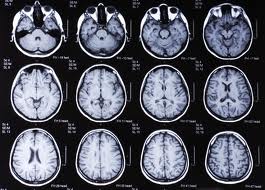
Brain scans of people who say they have insomnia have shown differences in brain function compared with people who get a full night’s sleep.images

Researchers at the University of California, San Diego, said the poor sleepers struggled to focus part of their brain in memory tests, reports the BBC

“Other experts said that the brain’s wiring may actually be affecting perceptions of sleep quality. The findings were published in the journal Sleep. People with insomnia struggle to sleep at night, but it also has consequences during the day such as delayed reaction times and memory. The study compared 25 people who said they had insomnia with 25 who described themselves as good sleepers. MRI brain scans were carried out while they performed increasingly challenging memory tests. One of the researchers, Prof Sean Drummond, said: “We found that insomnia subjects did not properly turn on brain regions critical to a working memory task and did not turn off ‘mind-wandering’ brain regions irrelevant to the task.

“This data helps us understand that people with insomnia not only have trouble sleeping at night, but their brains are not functioning as efficiently during the day.” A sleep researcher in the UK, Dr Neil Stanley, said that the quality of the sleep each group was having was very similar, even though one set was reporting insomnia. He said: “What’s the chicken and what’s the egg? Is the brain different and causing them to report worse sleep? “Maybe they’re perceiving what happened in the night differently; maybe what is affecting their working memory and ability to focus on the task at hand is also causing insomnia.”


More at: http://www.bbc.co.uk/news/health-23897665

Prosecutors fail to meet with Greyson and Loubani as 92,000 petition


Two Canadian men remain jailed in an Egyptian prison with no end in sight after a prosecutor failed to show up to a scheduled hearing, reports today’s Toronto Star

“Lawyers for filmmaker John Greyson, 53, and his friend Dr. Tarek Loubani, 32, waited outside the Cairo prison in the hot sun for seven hours, but the prosecutor never appeared, said Greyson’s sister, Cecilia.

imgres

“We were all taken aback,” she said, sounding exhausted. “We were hopeful the meeting would take place… It’s been a frustrating day.”

“The lawyers were to meet with the Egyptian prosecutor to plead a case for releasing the men, presenting travel documents and official letters showing they were traveling through Cairo and had no intention of staying.

“The men were arrested Aug. 16 when they entered a police station to ask for directions. Their 15-day detention period ends Saturday, but they are now expected to remain in prison indefinitely until a new hearing takes place. Cecilia said the earliest a new hearing could happen would be next week, but nothing has been scheduled yet.

“It’s a bit of limbo. We do understand that things are chaotic there, but we need information,” she said.The prosecutor failed to show up to a number of scheduled meetings Thursday, leaving many lawyers and prisoners waiting, she added. Canadian consular officials have been helping facilitate meetings at the prison. No charges have been laid, but Egyptian prosecutors have alleged the men conspired with the Muslim Brotherhood in an attack on a police station. Minister of State Lynne Yelich issued a statement Thursday calling for the release of the two men.

“Canada remains deeply concerned about the cases of Dr. Loubani and Mr. Greyson and we are disappointed that the hearing scheduled for today did not take place,” she said.“We continue to work at the highest levels to confirm the specific charges against Dr. Loubani and Mr. Greyson. As we have not yet received confirmation of the charges, the Government of Canada calls for their release.” At the time of their arrest, Greyson and Loubani were en route to Gaza, where Loubani was to teach emergency room medicine and Greyson was thinking of producing a documentary, friends and family have said. The men have not spoken directly with their families but Cecilia has heard that they are in good spirits and health, despite being in an overcrowded cell crammed with other prisoners. A social media campaign supporting Greyson and Loubani has picked up steam, with more than 92,000 people signing a petition to free them. Filmmaker Atom Egoyan made an impassioned plea for their release in a video this week.

“The president of York University, where Greyson is an associate professor and director of the graduate film program, also issued a statement calling for the men to be freed.“The University has been in contact with government officials to express our deep concern for the welfare of Greyson and Loubani,” said Mamdouh Shoukri.

“Members of the York community, through local efforts, petitions, and statements, have been actively involved in supporting their safe return.”

In the meantime, Cecilia said her family is barely eating or sleeping, as they continue to wait for news.

“We’re extremely stressed out. It’s been pretty horrible for all of us.”


More at: http://www.thestar.com/news/gta/2013/08/29/canadians_john_greyson_and_dr_tarek_loubani_remain_jailed_in_egypt_after_hearing_delay.html


Who wants English, anyway?

images-1Whence, and where, and why the English major? The subject is in every mouth—or, at least, is getting kicked around agitatedly in columns and reviews and Op-Ed pieces.”The English major is vanishing from our colleges as the Latin prerequisite vanished before it, we’re told, a dying choice bound to a dead subject,” writes Adam Gopnik in today’s New Yorker.
“The estimable Verlyn Klinkenborg reports in the Times that “At Pomona College (my alma mater) this spring, 16 students graduated with an English major out of a student body of 1,560, a terribly small number,” and from other, similar schools, other, similar numbers.

“In response, a number of defenses have been mounted, none of them, so far, terribly persuasive even to one rooting for them to persuade. As the bromides roll by and the platitudes chase each other round the page, those in favor of ever more and better English majors feel a bit the way we Jets fans feel, every fall, when our offense trots out on the field: I’m cheering as loud as I can, but let’s be honest—this is not working well.

“The defenses and apologias come in two kinds: one insisting that English majors make better people, the other that English majors (or at least humanities majors) make for better societies; that, as Christina Paxson, the president of Brown University, just put it in The New Republic, “ there are real, tangible benefits to the humanistic disciplines—to the study of history, literature, art, theater, music, and languages.” Paxson’s piece is essentially the kind of Letter To A Crazy Republican Congressman that university presidents get to write. We need the humanities, she explains patiently, because they may end up giving us other stuff we actually like: “We do not always know the future benefits of what we study and therefore should not rush to reject some forms of research as less deserving than others.”

“Well, a humanities major may make an obvious contribution to everyone’s welfare. But the truth is that for every broadly humane, technological-minded guy who contributed one new gadget to our prosperity there are six narrow, on-the-spectrum techno-obsessives who contributed twenty. Even Paxson’s insistence that, after 9/11, it was valuable to have experts on Islam around is sadly dubious; it was Bernard Lewis, a leading scholar on the subject, who consulted closely with Dick Cheney before the Iraq War, with the results we know. Continue reading “Who wants English, anyway?”

Unhappy workers more likely to smoke

Americans who are emotionally disconnected from their work and workplace, or “actively disengaged,” are slightly more likely to smoke than those who are “engaged” or “not engaged” on the job, reports Gallup today.

“Eighteen percent of actively disengaged workers smoke vs. 15% of engaged or not engaged employees.These data hold even after controlling for income level — meaning workers who are actively

images-1

disengaged, regardless of how much income they make, are more likely to smoke. The findings also hold true across gender, age, and education level. The actively disengaged category is the worst of Gallup’s engagement groupings, which also include “not engaged” and — the best group — “engaged.”

“These findings are based on Americans’ assessments of workplace elements with proven linkages to performance outcomes, including productivity, customer service, quality, retention, safety, and profit. These data are based on surveys of more than 50,000 American adults, including 8,011 smokers, conducted as part of the Gallup-Healthways Well-Being Index and Gallup Daily tracking from January through July 2013. Overall, 18% of American employees were actively disengaged at work in 2012, according to Gallup’s State of the American Workplace report.

“Gallup research has previously found a link between active disengagement at work and poor health. In fact, Gallup data have shown that the actively disengaged workers are just as likely as the unemployed to be in poor health. Those who are actively disengaged are more likely than other workers to have a host of chronic conditions and to be obese. And, they are more likely to experience stress, anger, and worry — particularly during the workweek — which could trigger them to smoke. The finding that these workers are also more likely to smoke fits with these prior discoveries.

“Having a low income, although related to both smoking and active disengagement, is not the reason why the actively disengaged are more likely to smoke. The actively disengaged, regardless of how much they earn annually, are more likely than those who are engaged to smoke.

“The causal direction of the relationship, though, is not clear from this data. It is possible that active disengagement causes workers to smoke, or it could be that something intrinsic to smokers makes them more likely to be actively disengaged on the job.

“Regardless of which direction the relationship goes, what is clear is that employers can benefit from helping employees either stop smoking or never pick up the habit at all. Not only are there obvious healthcare cost benefits to this, but now Gallup data also show that there may be productivity gains to be found as well if fewer workers smoke.”

More at: http://www.gallup.com/poll/164162/americans-hate-jobs-likely-smoke.aspx?utm_source=feedly

Fighting textbook costs

The fall semester is upon us, and that means one thing: It’s pilot (project) season for textbooks and their e-alternatives.imgres-3

Most students are stepping into their first class either this week or the next, and many of them will find themselves participating in their institution’s latest cost-saving experiment, reports InsideHigher Ed.  “In the name of student savings, institutions are testing everything from all-tablet learning to textbook rentals to open educational resources (OER) — though similar projects delivered mixed results last year.

This year’s experiments are not markedly different than those of previous years, but institutions are launching new pilot projects with “tremendous forward momentum,” said Nicole Allen, OER director of the Scholarly Publishing and Academic Resources Coalition, which promotes open-source alternatives in scholarly research.

“Semester after semester, students are facing higher and higher prices of textbooks,” Allen said. “There’s frustration with the fact that the current system for publishing textbooks puts up legal barriers, which is counter to what the Internet has to offer. The idea of a framework like open educational resources that makes that information available free is really appealing and in many ways common sense.”

“Put on notice by the president and pressured by cost-conscious families to make higher education more affordable, many institutions spy an opportunity to respond to the charge by curbing the cost of textbooks and other educational materials, although not necessarily with open resources. Common strategies include allowing students rent textbooks for a semester or pushing bookbag-friendly e-textbooks. Yet other institutions are launching more ambitious projects, like Lynn University’s investment in hundreds of iPad minis for its incoming freshmen, which shifts part of the cost from the student to the university.

“Lynn hosted the third and final presidential debate last October, and has taken advantage of a massive upgrade to its wireless infrastructure that was required to accommodate the campaign media circus. Faculty members have for months tinkered with laptops and tablets to familiarize themselves with the iOS platform, and this fall, the university will offer nine introductory courses through Apple’s digital course manager, iTunes U.

“Essentially, our goal is to get rid of all textbooks in our core curriculum,” said Chris Boniforti, the university’s chief information officer. “Without getting myself in too much trouble, I’d like for that to happen next year.”

“Given Apple’s tendency to update its tablets about once a year, Boniforti said students will be able to upgrade to the newest model once their iPad has turned two years old. Upperclassmen interested in the courses can also rent an iPad for $100 — less than the cost of the textbook. If a student breaks the iPad, whether by accident or not, the university will repair it and issue a rental in the meantime. That’s a lot of iPads, Boniforti acknowledged.”

Read more: http://www.insidehighered.com/news/2013/08/28/cost-textbooks-focus-universities-launch-pilot-projects#ixzz2dKaIPGH4
Inside Higher Ed

Selling out the university

This essay starts with utopia—the utopia known as the American university, writes Thomas Frank in The Baffler

“It is the finest educational institution in the world, everyone tells us.”Indeed, to judge by the praise that is heaped upon it, the American university may be our best institution, period. With its peaceful quadrangles and prosperity-bringing innovation, the university is more spiritually satisfying than the church, more nurturing than the family, more productive than any industry.

images

“The university deals in dreams. Like other utopias—like Walt Disney World, like the ambrosial lands shown in perfume advertisements, like the competitive Valhalla of the Olympics—the university is a place of wish fulfillment and infinite possibility. It is the four-year luxury cruise that will transport us gently across the gulf of class. It is the wrought-iron gateway to the land of lifelong affluence.

“It is not the university itself that tells us these things; everyone does. It is the president of the United States. It is our most respected political commentators and economists. It is our business heroes and our sports heroes. It is our favorite teacher and our guidance counselor and maybe even our own Tiger Mom. They’ve been to the university, after all. They know.

“When we reach the end of high school, we approach the next life, the university life, in the manner of children writing letters to Santa. Oh, we promise to be so very good. We open our hearts to the beloved institution. We get good grades. We do our best on standardized tests. We earnestly list our first, second, third choices. We tell them what we want to be when we grow up. We confide our wishes. We stare at the stock photos of smiling students, we visit the campus, and we find, always, that it is so very beautiful.

“And when that fat acceptance letter comes—oh, it is the greatest moment of personal vindication most of us have experienced. Our hard work has paid off. We have been chosen.

“Then several years pass, and one day we wake up to discover there is no Santa Claus. Somehow, we have been had. We are a hundred thousand dollars in debt, and there is no clear way to escape it. We have no prospects to speak of. And if those damned dreams of ours happened to have taken a particularly fantastic turn and urged us to get a PhD, then the learning really begins.”


More at: http://thebaffler.com/past/academy_fight_song

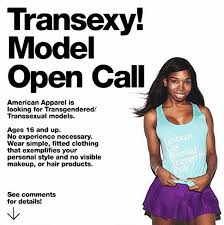
American Apparel’s transgender call

imgres-1American Apparel, the clothing company that has historically reached out to the lesbian, gay, bisexual and transgender community (though some have argued “capitalize upon” would be a more appropriate way of putting it) and marketed clothing to pro-LGBT individuals, announced via Instagram an open call for “transgendered/transsexual” models last week, reports HuffPo

“The timing of the move comes just days after the transgender conversation moved into the national spotlight with Chelsea Manning coming out of the closet and the discussion of trans people in the military and prisons gaining more traction in the mainstream media.

“American Apparel is no stranger to controversy, with the company’s CEO having endured multiple lawsuits, including claims that he used one of this employees as a”sex slave.” The company has also been in hot water for allegedly having a policy of firing employees that are “too ugly” and reportedly releasing an employee that was in chemotherapy.

“While the company should probably reconsider its use of the word “transgendered” versus “transgender,” American Apparel has, in fact, used transgender models in the past — notably Isis King from “America’s Next Top Model.” The clothing company also launched a joint campaign with GLAAD earlier this year that featured an LGBT pride t-shirt”


More at: http://www.huffingtonpost.com/2013/08/26/american-apparel-transgender-models_n_3817396. 

Ivies in debt? No Worries

Eleven of the nation’s most selective universities together have $26 billion in debt on the books, according to a new analysis, reports InsideHigher Edimages-1

“But while much smaller debt loads would be seen as risky and perhaps life-threatening for less-well-off institutions, these universities have top-notch credit ratings and could probably borrow more if they wanted.

“The Ivy League colleges plus Duke University, the Massachusetts Institute of Technology and Stanford University had $26.42 billion in debt at the end of the 2012 fiscal year, according to figures reported by the Cornell Higher Education Research Institute.

“In an article for Cornell Alumni Magazine, which is operated by the alumni association independently of the university proper, the institute’s director, Ronald Ehrenberg, and research assistant, Ross Milton, argue that the figures alone don’t tell the full story. Instead, they argue, observers need to look at why and for what a college borrows.

“Of the institutions they examined, Cornell had the highest ratio of debt to endowment size — $1.8 billion in debt and a $4.4 billion endowment.

“The real issue to me is, what is the impact of each of these debt-financed projects on the operations of the university?” Ehrenberg said in an interview. Continue reading “Ivies in debt? No Worries”

Greyson and Loubani in the press

John Greyson and Tarek Loubani, still held by the Egyptian government, were featured in the lead article in the Sunday New York Times. The two are detained by the Egyptian government without charge should be released immediately, states an editorial today in the Toronto Globe and Mail. “The Canadian government has demanded their release and the Foreign Affairs Minister, John Baird, says there is no basis for holding either man. Keeping them in prison for another week, as the Egyptians seem prepared to do, is indefensible.

Unknown

“Messrs. Greyson and Loubani were arrested on Aug. 16 in Cairo when, according to reports, they went into a police station to ask for directions. Egyptian authorities subsequently issued a statement saying two Canadians and seven other foreign nationals had been arrested and were being investigated for threatening security and social peace, belonging to an armed gang and being in possession of firearms, ammunition and explosives. An Egyptian court ruled they could be held for 15 days without charge.

“At best, the men were mistakenly lumped in with other arrestees during Egypt’s ongoing civil unrest; at worst, the accusations are specious.

“Mr. Greyson is a professor at Toronto’s York University, a prominent gay activist, an artist and one of Canada’s most noted film directors (Patient Zero, Lilies). Mr. Loubani is a professor at Western University in London, Ont. and an emergency room doctor who has dedicated much of his life to improving ER training in Gaza. According to their supporters, they were on their way through Cairo to Gaza, where they planned to work on a joint project, and were delayed for a day. It was during their extra night in Cairo that they got lost in the city and wandered into a police station looking for directions. They have been out of contact with their families ever since; Canadian consular officials have visited them in jail and say they are in good health.

“There is no valid reason for the two men to continue to be detained. Their government has vouched for them and asked for their release, and their credentials are easily confirmed.”


More at: https://worlding.org/wp-admin/post-new.php